
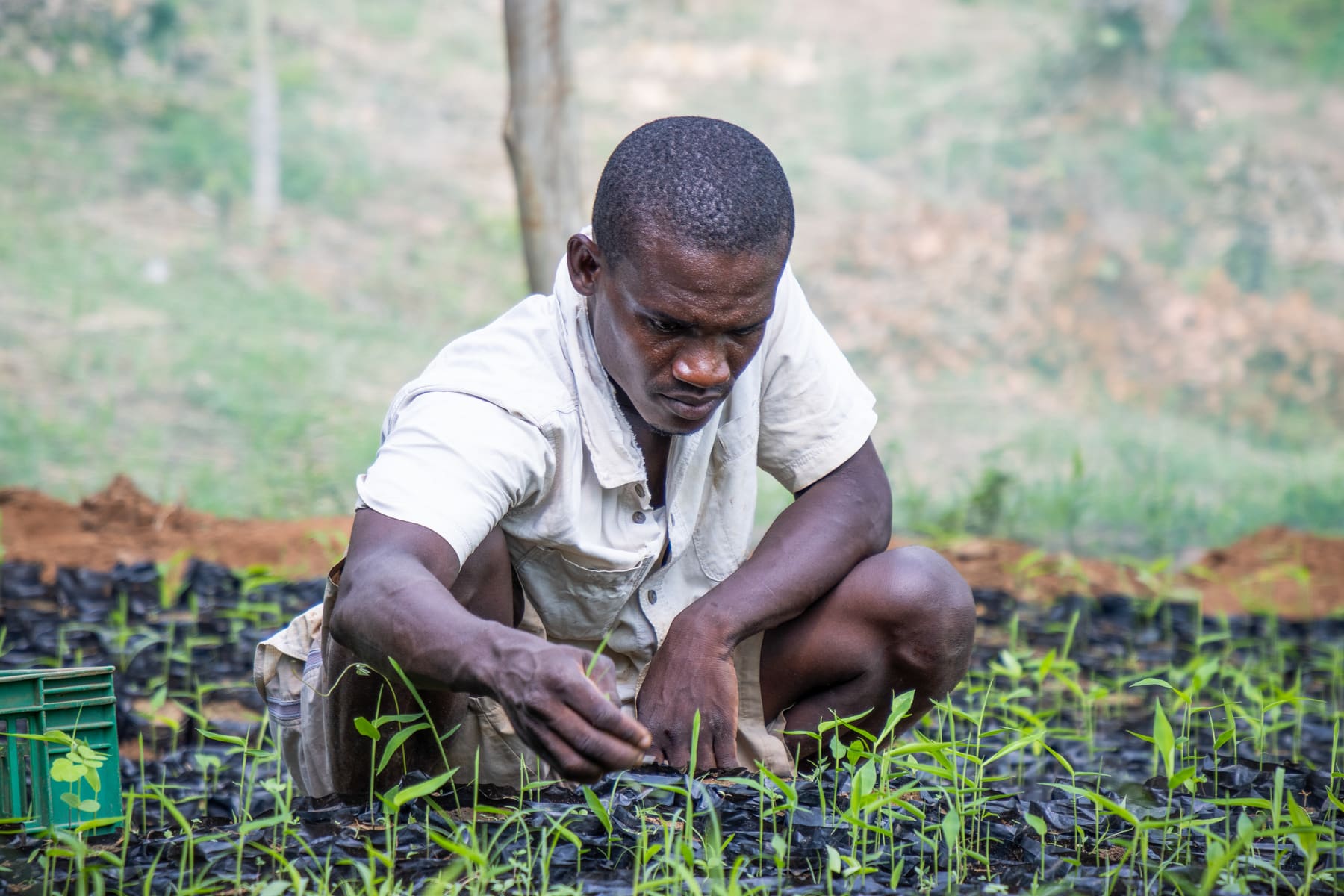
In Kadzuhoni, Kilifi County, inclusion is not a policy statement. It is patient instruction, shared routines, and a teammate whose energy lifts the whole planting team.
At EarthLungs, our work goes beyond restoring landscapes; we are equally committed to building teams and systems where people from different backgrounds and abilities can contribute, grow, and belong. Our Diversity, Equity, Inclusion, and Belonging (DEIB) commitment guides how we recruit, collaborate, and create opportunity across our restoration sites.
In Kadzuhoni, Kilifi County, Kenya, this commitment is reflected in the story of Dama, a temporary worker whose consistency, discipline, and positive spirit have made her a valued member of the site team.
Dama is deaf and non-speaking and communicates non-verbally. In many workplaces, this could easily become a barrier to opportunity. At EarthLungs, the focus is placed instead on capability, contribution, and teamwork. From her first days on site, Dama demonstrated strong attention to detail and a steady approach to her responsibilities. Through observation, collaboration with colleagues, and practical demonstration, she quickly adapted to workflows and expectations.
Her daily work involves hands-on nursery and restoration support tasks that require patience, precision, and care, from seedling handling to site preparation activities. These are responsibilities where consistency matters, and her supervisors note that her output and reliability are among the strongest within the temporary worker group.
Beyond her technical contribution, Dama brings something equally important to the field: energy and morale. She is known among team members for her cheerful presence and high spirits during planting sessions. Her enthusiasm is visible in her body language, her readiness to engage in tasks, and the way she encourages a positive atmosphere around her. Even without spoken words, her attitude communicates clearly, and it lifts the team.
Inclusion Is Operational, Not Theoretical
Inclusion on restoration sites is not theoretical; it is operational. It happens through simple but intentional actions: patient instruction, peer support, visual demonstrations, task modeling, and mutual respect among team members. Teams learn to communicate beyond words: through gestures, demonstrations, and shared routines, reinforcing cooperation and trust.
This environment allows individuals like Dama to work with confidence and independence, while also strengthening team cohesion overall.
Equity and Belonging in Practice
Our DEIB principle of equity calls for getting rid of barriers that prevent fair participation. In practice, that means evaluating people based on performance and potential, not assumptions. It means designing workflows that allow multiple ways of learning and contributing. It also means recognizing that talent and commitment are widely distributed, even when opportunity is not.
Our principle of belonging goes even further: it is not only about access, but about connection and value. Belonging means being recognized as part of the team, being trusted with responsibility, and knowing your contribution matters.
Dama’s journey reflects exactly that.
“Dama is proof that dedication and capability are not defined by how someone communicates, but by how they show up and deliver. She is focused, dependable, and takes pride in her work. She is an important part of our Kadzuhoni team, and her positive energy is felt across the planting team.”
Inclusive Restoration Is Stronger Restoration
Stories like hers remind us that inclusive restoration is stronger restoration. When diverse individuals are given real opportunity and support, the results are visible in team culture, in work quality, and in long-term impact.
As EarthLungs continues to grow its restoration footprint, we remain committed to growing inclusive teams alongside thriving forests, because environmental restoration and social inclusion are not separate goals. They are mutually reinforcing.
Belonging, like restoration, is built through daily action.