
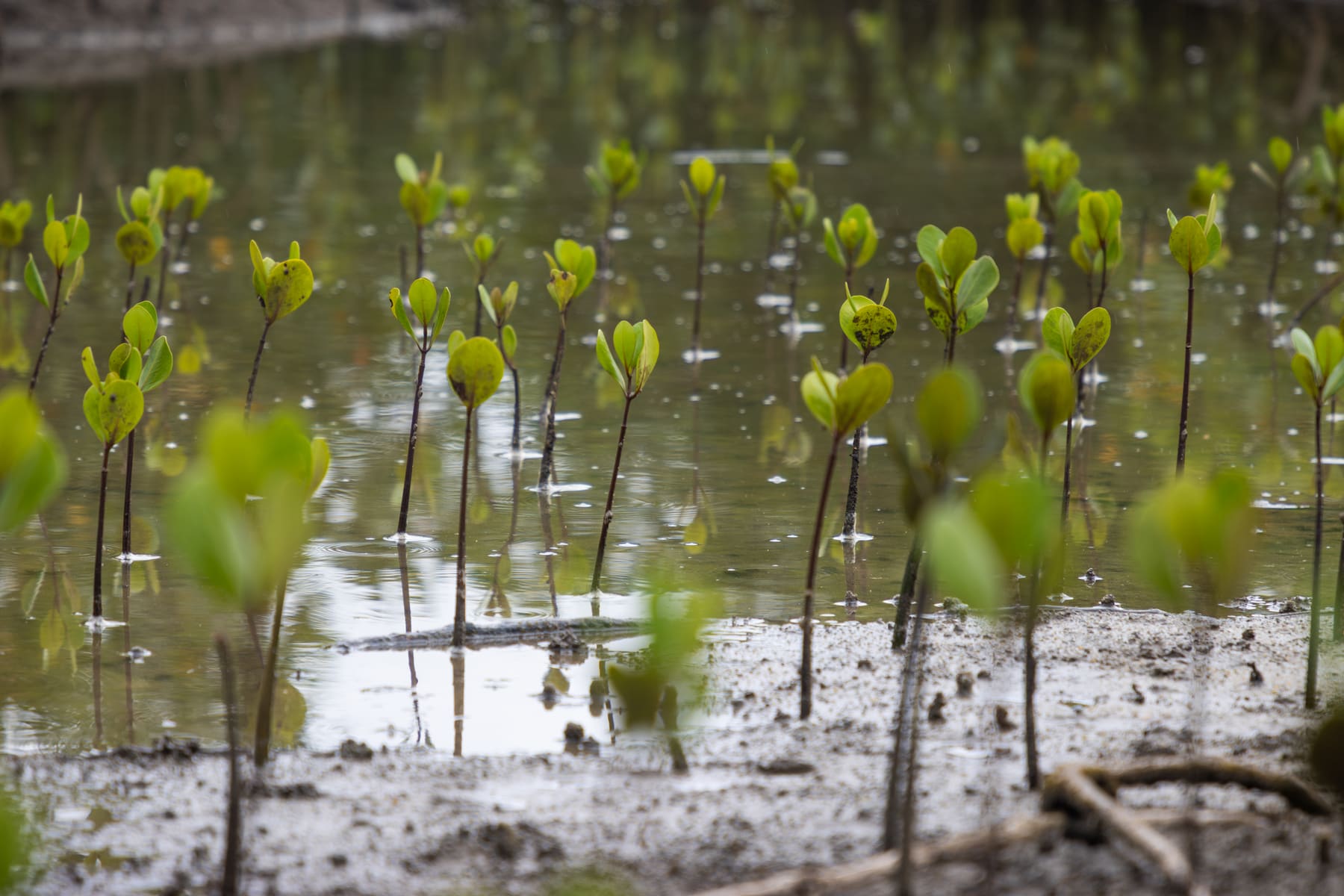
The rain that floods Nairobi does not disappear. It travels down the Tana River to the delta, where our teams meet it as cut-off roads, washed-away nurseries, and shifting targets.
When heavy rains fall over Nairobi, the impact is immediate. Roads flood, movement slows, and for a few hours, sometimes longer, the city feels overwhelmed by water.
Then, just as quickly, the water seems to disappear.
It is a question we hear often: where does all that water go?
The answer lies in the natural flow of our landscapes. The water drains into streams and rivers, joining larger systems such as the Tana River, eventually making its way to the Indian Ocean.
But while the flooding in the city may feel temporary, the effects downstream tell a very different story.
What Happens Downstream
At EarthLungs, we see firsthand what happens when this water arrives.
At our sites located at the Tana Delta, which links the fresh water from upcountry and the Indian Ocean, water gathers and floods in areas such as Kilelengwani, Chara, and Ozi within the Tana River ecosystem. Periods of intense rainfall upstream translate into rising water levels, flooding, and significant disruption to our restoration work. What begins as rain in the city becomes a force that reshapes the environments where we work.
For our teams on the ground, flooding is not an abstract concept. It is something they navigate physically, daily, and often under difficult conditions.
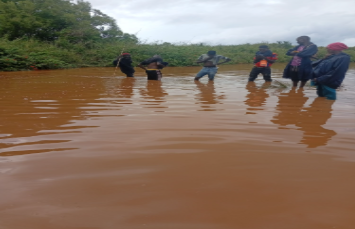
Access Cut Off
One of the immediate challenges is access to our planting or restoration sites.
Floodwaters often cut off roads and pathways leading to our sites, making it difficult, and at times impossible, for our teams to reach the areas where restoration activities are taking place. What would normally be a routine journey becomes uncertain, delayed, or completely halted.
This does not just affect movement; it disrupts the entire workflow. Restoration is a time-sensitive process, and delays in accessing sites can have ripple effects across planting schedules, monitoring timelines, and overall project planning.
Interrupted Monitoring and Decision-Making
Monitoring is a critical part of our work. It allows us to track the survival and growth of restored ecosystems, collect data, and make informed decisions about the next steps in our restoration efforts.
During floods, these activities are significantly disrupted.
Regular data collection becomes difficult, inspections are delayed, and reporting timelines are affected. Without consistent monitoring, it becomes harder to maintain the level of precision and accountability that restoration work requires.
For our teams, this means working around uncertainty, adapting plans, revisiting sites when conditions allow, and ensuring that no critical data is lost despite the interruptions.
Damage to Nurseries and Seedlings
Behind every successful restoration effort is a nursery, a space where seedlings are carefully nurtured before they are planted in the field.
At our Tana River sites, such as Kilelengwani, flooding poses a serious threat to these nurseries. Rising waters can wash away potted tubes, damage young seedlings, and weaken nursery structures.
Months of preparation can be undone in a matter of hours.
For our teams, this is one of the most difficult aspects to manage. Each seedling represents time, effort, and the promise of future growth. When they are lost to floods, it is not just a setback in numbers; it is a setback in progress.
Slowed Productivity, Shifting Targets
Flooding inevitably slows down our work.
Planting activities are postponed, seedling production is affected, and overall productivity decreases. Targets that were set with careful planning must now be adjusted to accommodate changing conditions.
This does not mean the work stops entirely. Instead, it evolves. Our teams adapt, reprioritize, and continue where possible, but always with the understanding that nature operates on its own terms.
Safety on the Frontlines
Perhaps the most critical concern during flooding is safety.
Flooded areas create unstable ground, hidden hazards such as wildlife in search of higher ground, and increased risks of injury. Moving through such environments requires caution, experience, and constant awareness.
In some cases, the risks go beyond terrain. Floodwaters can carry wildlife into new areas, including crocodiles and snakes that move and hide within the flooded zones. This adds another layer of danger for our teams working on-site.
Despite these challenges, our teams continue to show resilience and commitment, navigating these conditions to ensure that restoration efforts move forward as safely as possible.
A Connected System
What we witness at our sites is a powerful reminder of how interconnected our ecosystems are.
The water that floods the streets of Nairobi does not disappear; it travels. It moves through rivers, across landscapes, and into ecosystems where its impact is both visible and lasting.
This connection highlights a broader reality: environmental challenges are rarely isolated. Urban flooding, river dynamics, and coastal ecosystems are all part of the same system.
The Role of Restoration
In the face of these challenges, restoration becomes more important than ever.
Healthy ecosystems play a vital role in regulating water flow. Mangrove forests help absorb excess water, reduce runoff, and act as natural buffers against flooding.
At EarthLungs, our work is focused on rebuilding these systems, not just for environmental benefit, but for the resilience of communities and landscapes alike.
Mangrove restoration, in particular, is critical in areas like Kilelengwani in the Tana Delta. These ecosystems help stabilize coastlines, reduce the impact of flooding, and create conditions for biodiversity to thrive.
Beyond What We See
Flooding is often seen as a moment, a temporary disruption that passes once the water recedes.
But at our sites, it is part of a larger, ongoing story. A story of adaptation, resilience, and the realities of working within dynamic natural systems.
It is also a story of people, our teams, our communities, and the collective effort required to restore and protect these ecosystems.
Looking Ahead
As the rains continue and the water makes its journey from city to coast, we are reminded of the importance of long-term, sustainable solutions.
Restoration is not always straightforward. It comes with challenges, uncertainties, and moments that test both systems and people.
But it also comes with impact, the kind that builds resilience over time.
At EarthLungs, we remain committed to this work. Through every challenge, including floods, we continue to restore ecosystems, support communities, and contribute to a future where both people and nature can thrive.